

Finance leaders today face a simple but critical question: can they trust their accounting systems to run reliably through payroll runs, month-end closes, and audit seasons even when digital risks emerge?
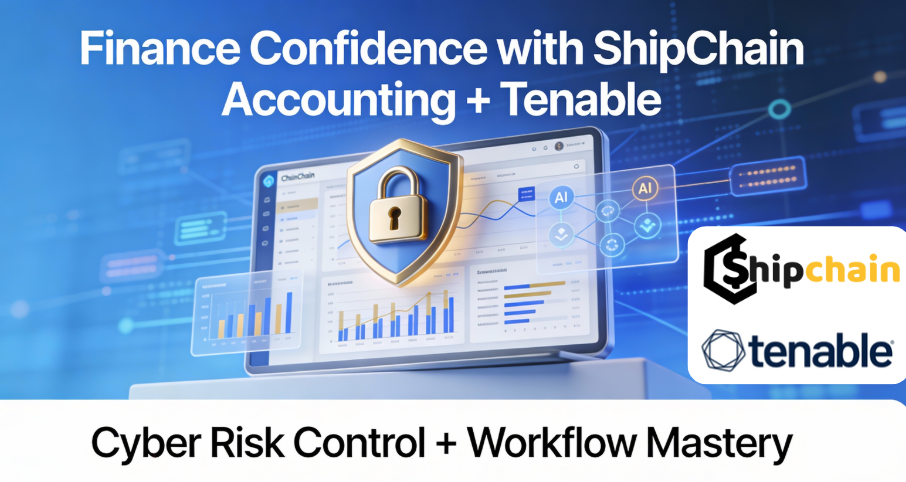
Modern accounting operations depend on interconnected systems that store and process sensitive financial data, so confidence requires both clear cyber risk visibility (where security platforms such as Tenable help organizations understand exposure) and structured accounting operations control (where ShipChain Accounting provides the operational backbone).
📌 Why Finance Leaders Now Worry About Control and Trust
The accounting function has transformed dramatically over the past decade. What began as standalone desktop applications and manual spreadsheet reconciliations has evolved into sophisticated cloud ecosystems.
General ledgers now integrate seamlessly with banking platforms, payroll processors, tax compliance software, and enterprise resource planning systems. Every journal entry, vendor payment approval, revenue recognition schedule, and financial consolidation flows through these interconnected digital pathways.

This connectivity delivers undeniable benefits. Real-time bank feeds eliminate manual data entry. Automated tax calculations reduce compliance errors. Cloud collaboration enables finance teams to work across time zones and locations. Month-end close cycles that once took 10-12 days now routinely complete in 3-5 days for forward-thinking organizations.
However, this evolution introduces new dependencies that finance leaders cannot ignore. A configuration error in a bank integration can halt ACH payments during payroll week. An unpatched vulnerability in the general ledger platform can expose months of transaction history.
A third-party payroll provider’s outage can delay direct deposits and create employee relations challenges. These are not theoretical risks they represent real operational threats that can cascade across the entire financial close process.
Finance operational confidence emerges when controllers, CFOs, and accounting managers can answer three fundamental questions with clarity:
- Are our financial systems secure and available when we need them most?
- Do our accounting workflows execute consistently, even under pressure?
- Can we demonstrate control and audit readiness to regulators, auditors, and executive leadership?
The answer lies in combining two essential capabilities: awareness of cyber exposure across financial platforms and structured control over accounting execution. Without both working together, uncertainty grows, deadlines slip, and leadership spends more time managing crises than driving strategic value.
📌 What Confidence Means in Modern Accounting Operations
🔹What “Confidence” Really Means in Accounting
For finance leaders, confidence means knowing that accounting processes will execute as expected from transaction posting to report generation to compliance validation. It includes three practical components:

- Visibility: Clear understanding of what is happening across ledgers, reconciliations, and reporting cycles at any moment.
- Control: Ability to standardize workflows, manage exceptions, and adjust priorities without creating errors or delays.
- Predictability: Operations behave within expected parameters, even when external factors like system issues or access problems arise.
When these elements align, controllers and CFOs can focus on analysis and strategy rather than firefighting process breakdowns.
🔹Why Accurate Reports Alone Are Not Enough
Clean financial statements and accurate GL balances represent the end result, not the full operational picture. Leaders also need assurance that:
- The systems generating those reports remain available during critical periods.
- Data flowing into reports has not been altered or accessed improperly.
- Workflows supporting those reports follow consistent, auditable processes.
Two accounting teams can produce identical P&L statements, yet one may operate with fragmented workflows across spreadsheets and emails, while the other maintains structured control through a dedicated platform. The difference shows up not in the numbers, but in reliability under pressure.

📌 Why Cyber Risk Is a Serious Accounting Problem
🔹Downtime During Payroll, Month-End, and Tax Cycles
1. Accounting cyber risk creates operational consequences that extend far beyond IT service desks. When financial systems experience downtime, the business impact lands directly on finance teams:
2. Payroll week scenario: The payroll integration platform suffers a ransomware attack on Wednesday afternoon. Direct deposit files cannot transmit to banks until resolution. 5,000 employees receive delayed payments over a holiday weekend. HR fields hundreds of calls while finance leadership explains the issue to the compensation committee.
3. Month-end close scenario: General ledger consolidation fails due to a cloud configuration issue during the busiest week of the quarter. Intercompany eliminations cannot post. Variance analysis stops. The CFO’s board presentation slides remain blank while executives wait for resolution.
4. Tax season scenario: State tax filing portals become unavailable due to DDoS attacks just before quarterly deadlines. Automated returns cannot transmit. Manual workarounds create additional exposure. Penalties loom as extensions become inevitable.
Each scenario represents lost productivity, compliance risk, and leadership credibility all stemming from digital availability failures rather than accounting errors.
🔹Financial Data Manipulation and Insider Access Risks
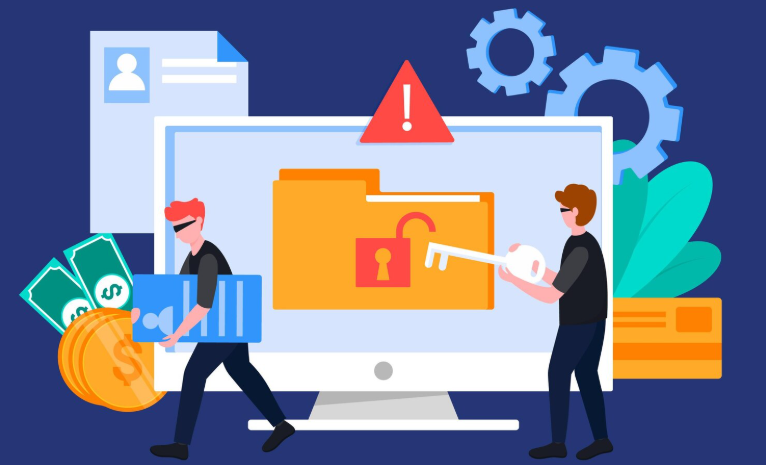
Beyond outages, more insidious threats target financial data integrity itself:
1. Transaction manipulation: Attackers with compromised credentials alter vendor payment amounts or dates. $250,000 destined for legitimate suppliers becomes wire transfers to fraudulent accounts. The discrepancy appears as a reconciling item during bank reconciliation — weeks or months later.
2. Revenue recognition interference: Customer contract values or recognition schedules change subtly in the billing system. Quarterly revenue appears inflated by 3%, triggering guidance updates and analyst scrutiny. Internal investigations consume hundreds of staff hours.
3. Insider access abuse: Former employees retain access to financial systems after termination. Sensitive customer pricing, margin data, or acquisition targets become exposed to competitors. Detection occurs only during annual access reviews long after the damage.
These scenarios erode trust in the entire financial reporting process. Leadership cannot confidently certify numbers to auditors or executives when data integrity itself becomes questionable.
🔹Compliance, Audit, and Reputation Impact
Regulatory frameworks amplify cyber risk consequences for accounting teams:
1. SOX 404 requirements demand management certification that internal controls over financial reporting including IT general controls operate effectively. System compromises create documentation gaps that external auditors flag as material weaknesses.

2. GDPR Article 33 mandates notification of personal data breaches within 72 hours. Customer payment information exposed through accounting system vulnerabilities triggers mandatory disclosures, fines, and legal exposure.
3. Board reporting expectations evolve as institutional investors demand cyber risk disclosures alongside traditional financial metrics. CFOs must explain not just performance results, but system reliability supporting those results.
When cyber incidents intersect with accounting operations, finance leadership faces cascading consequences that extend far beyond immediate operational disruption.
📌 Understanding Exposure in Accounting Systems
🔹What “Exposure” Means for Financial Data
Exposure refers to the potential entry points where financial systems, data, and access could be compromised. In accounting environments, this includes:
- Cloud platforms hosting general ledgers, AP/AR modules, and reporting tools.
- Integration points with banks, tax software, and payroll providers.
- User accounts, shared drives, and endpoints that connect to financial data.
- Legacy systems or third-party applications that maintain financial records.
Each represents a surface that could be misconfigured, unpatched, or targeted. Leaders cannot manage what they cannot see, making exposure awareness foundational to accounting system security.
🔹How Security Platforms Like Tenable Create Risk Visibility
Security platforms such as Tenable help organizations understand cyber exposure across systems that store and process sensitive financial data. They provide finance teams with:
- A clear inventory of all assets connected to accounting operations.
- Identification of vulnerabilities, weak configurations, or excessive access that could affect financial systems.
- Prioritization of risks based on their potential impact to critical workflows.
This visibility translates technical findings into business terms: “These general ledger integrations carry elevated exposure” or “Payroll system endpoints need attention before quarter-end.” Such awareness enables proactive decisions rather than reactive crisis management.

“Building finance confidence is about ROI. If you are looking to implement Tenable’s security solutions while staying within budget, make sure to check for a Tenable coupon code to reduce your initial setup costs.”
📌 Operational Control in Accounting
🔹Why Centralized Accounting Workflows Matter
Fragmented accounting operations create exponential complexity during peak periods. Consider the typical month-end coordination across eight Excel templates, three email approval chains, two desktop reporting tools, and manual manager notifications. When the controller requests status updates, staff scramble to consolidate information from multiple sources.
Centralized workflows eliminate this chaos through:
Standardized processes: Transaction posting follows predefined routing regardless of staff rotation or volume spikes.
Real-time status: Leadership sees complete period-end status open items, overdue approvals, variance thresholds on one screen.
Automated escalation: Bottlenecks trigger notifications to appropriate management levels without manual follow-up.
Complete audit trails: Every action, approval, and adjustment captured automatically for compliance documentation.

🔹ShipChain Accounting as the Operations Backbone
ShipChain Accounting functions as a structured accounting operations platform that helps finance teams centralize workflows and maintain control over financial processes. It supports:
- Organized transaction posting, approval routing, and reconciliation management.
- Visibility into period-end status, bottlenecks, and outstanding items.
- Standardized audit trails that simplify compliance and external reviews.
By providing this operational backbone, ShipChain Accounting enables controllers to manage accounting execution with clarity rather than constant coordination across tools and teams.
👉 Learn how ShipChain Accounting structures financial workflows for better control: ShipChain Accounting
📌 How Risk Awareness and Accounting Operations Work Together
🔹Two Views of the Same Financial Reality
Cyber exposure visibility and accounting operations control address complementary needs:
- Exposure platforms (such as Tenable) answer: “Where are our financial systems potentially vulnerable?”
- Operations platforms (such as ShipChain Accounting) answer: “How do we execute accounting processes reliably given those risks?”
Together, they create a complete picture: awareness of digital weaknesses paired with structured execution to maintain continuity.

🔹Real Scenario – Payroll Period and Exposed System Access
Consider a typical payroll week where:
- Security teams identify elevated exposure on endpoints used by payroll administrators to access the financial system.
- Accounting teams see via ShipChain Accounting that 40% of payroll transactions still require manual approvals before the deadline.
- Leadership decides to implement temporary access controls and reroute approvals through secure channels, visible in the operations platform.
The result: payroll processes continue without interruption while security gaps are addressed systematically. This coordination transforms potential disruption into managed execution.
📌 Business Benefits for Finance and Accounting Leaders
When finance teams combine financial data exposure awareness with accounting operations control, they gain measurable advantages:
- Predictable closes: 4-day month-ends replace 10-day scrambles through structured workflows and known system risks
- Audit confidence: Complete documentation satisfies SOX 404 walkthroughs without last-minute scrambles
- Crisis resilience: Payroll, tax filings, and consolidations continue despite system incidents through established contingency paths
- Leadership focus: Controllers analyze variances instead of chasing spreadsheet updates
- Staff retention: Clear processes reduce burnout during peak seasons
- Regulatory trust: Demonstrable controls satisfy external examiners and compliance requirements

📌 Conclusion – Financial Confidence Comes from Awareness and Control
Finance operational confidence does not emerge from perfect systems alone. It requires deliberate attention to two interdependent realities: understanding accounting cyber risk and exposure across financial platforms, and maintaining disciplined control over accounting execution.
Security platforms such as Tenable provide essential visibility into where financial data may be vulnerable. Accounting operations platforms like ShipChain Accounting deliver the workflow structure needed to execute reliably despite those risks.
When finance leaders build both capabilities, uncertainty decreases. Month-end closes run smoothly. Audits conclude without drama. Payroll processes complete on schedule. Most importantly, controllers and CFOs gain the clarity needed to lead rather than react.
In modern accounting environments, true confidence comes from knowing both where your systems stand and how your operations will respond. That dual foundation supports not just compliance and accuracy, but sustainable financial leadership.
“Related Article”
- What Is Cyber Exposure Management & Why Businesses Need It
- Supply Chain Operational Confidence in Digital Logistics
❓ FAQs
1. What is accounting operational confidence?
Finance leaders’ ability to trust accounting systems will run reliably through payroll, month-end, and audits — even when cyber risks emerge.
2. How does cyber risk affect accounting operations?
System downtime delays payroll and closes. Data manipulation creates audit discrepancies. Access issues compromise financial integrity.
3. What role does Tenable play for finance teams?
Security platforms such as Tenable help identify cyber exposure across financial systems, integrations, and endpoints that process sensitive data.
4. How does ShipChain Accounting help controllers?
ShipChain Accounting structures workflows for transaction approvals, reconciliations, and period-end management with clear visibility and audit trails.
5. Why combine cyber visibility with accounting control?
Risk awareness shows where systems are vulnerable. Workflow control ensures operations continue reliably despite identified exposures.