

In the high-stakes cybersecurity landscape of 2026, simply “scanning for bugs” is no longer enough. As AI-driven threats accelerate and attack surfaces expand into complex multi-cloud and IoT environments, the battle between Tenable vs Rapid7 has evolved into a quest for Contextual Exposure Management. ⚡
The choice between these two titans often comes down to a fundamental question: Do you need the surgical, audit-grade precision of Tenable’s Nessus engine, or the high-speed, automation-heavy workflow of the Rapid7 Insight platform? 🎯
This guide is designed to move beyond the marketing fluff. We have analyzed the latest 2026 feature updates from Tenable’s “Exposure Signals” to Rapid7’s “Active Risk” scoring to help you determine which tool will actually reduce your risk and which one will just fill your inbox with alerts.
Are you ready to stop chasing every CVE and start securing what matters? Let’s break down the 2026 showdown between Tenable and Rapid7.
1.) What Is Vulnerability Management and Why It Matters Today 🛡️
Today’s Vulnerability Management (VM) is a continuous, intelligence-driven lifecycle, not a periodic checklist. It’s the disciplined practice of identifying, evaluating, treating, and reporting on security weaknesses across your entire digital estate from ephemeral cloud containers and SaaS applications to legacy OT systems and remote employee devices.

Why this evolution is non-negotiable in 2026:
- The Perimeter is Everywhere (and Nowhere): Hybrid work and multi-cloud strategies have dissolved the traditional network boundary. Effective VM must provide persistent, unified visibility across this fluid attack surface.
- The “Critical” Alert Crisis: Teams are paralyzed by thousands of high-severity findings. Modern platforms must cut through the noise using threat intelligence and business context to highlight the 3-5% of vulnerabilities that pose real, exploitable risk.
- Compliance is the Floor, Not the Ceiling: While frameworks like NIST CSF, PCI DSS, and GDPR mandate systematic VM, leading platforms turn compliance from an audit burden into a continuous, demonstrable security outcome and a competitive advantage.
Choosing between Tenable and Rapid7 is fundamentally about selecting the engine that will power this critical lifecycle, shaping your team’s daily workflow and strategic outcomes.
2.) What Is Tenable? Key Features & Capabilities 🚀
Tenable is widely regarded as the “Gold Standard” of vulnerability detection. In 2026, the company has pivoted from being a point-product vendor to a leader in Exposure Management, aiming to close the gap between traditional IT security and modern attack surfaces like Cloud and AI.
🔹The 2026 “Tenable One” Ecosystem
The flagship Tenable One Exposure Management Platform unifies several specialized tools into a single pane of glass. It doesn’t just list vulnerabilities; it maps how they connect to identities and privileges to show real attack paths.
- Tenable AI Exposure (New for 2026): Launched in January 2026, this module specifically tackles the “AI Exposure Gap.” it discovers sanctioned and shadow AI usage (like ChatGPT or custom internal LLMs), monitors for data leakage, and provides governance over autonomous AI agents. 🤖
- Nessus (The Engine): With over 222,000 plugins and coverage of 113,000+ CVEs, Nessus remains the world’s most accurate scanner. Its 2026 version (v10.11) features “Triggered Agent Scanning,” allowing agents to scan automatically when specific network conditions are met.
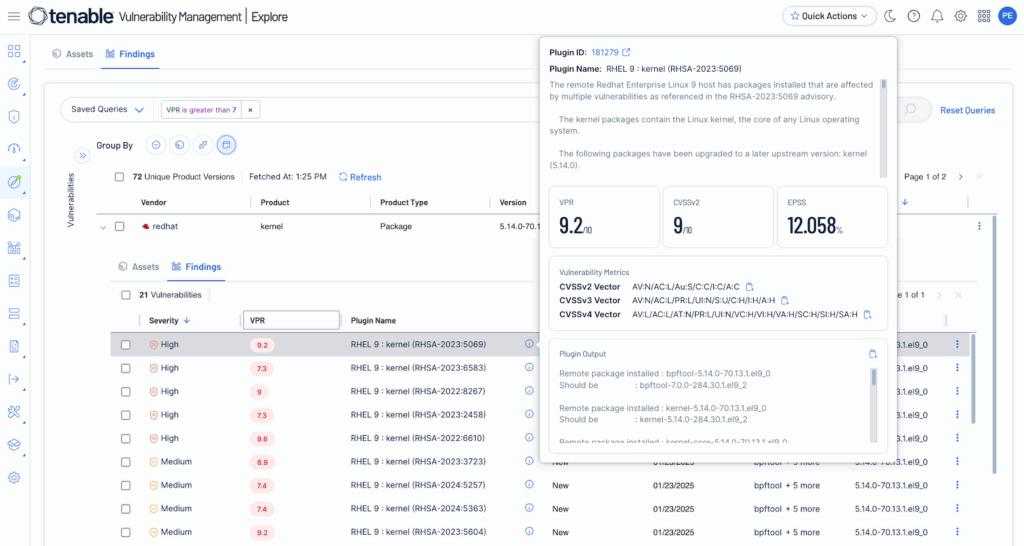
- VPR (Vulnerability Priority Rating) with Generative AI: Tenable’s VPR has been supercharged with GenAI. While traditional CVSS scores might flag 60% of your network as “Critical,” Tenable’s AI-driven VPR pinpoints the critical 1.6% that are being actively weaponized in the wild, providing clear “Explainability” for why a specific bug is a threat. 🎯
- Tenable Identity Exposure: A specialized focus on Active Directory (AD) and IAM. In 2026, it supports AWS ABAC (Attribute-Based Access Control), providing granular visibility into permission categories and least-privilege recommendations.
- Unified Patching Experience: Released in late Jan 2026, Tenable now features a reimagined patching workflow within its platform, including a 6-step onboarding wizard and “Global Pause” emergency controls for autonomous patching.
🔹Key Advantages in 2026:
- Six Sigma Accuracy: Tenable maintains a historic benchmark of only 0.32 defects per 1 million scans, meaning your team spends less time on false alarms.
- OT & Critical Infrastructure: Tenable OT Security is best-in-class for securing industrial environments (ICS/SCADA), bridging the gap between the factory floor and the SOC.
- Predictive Prioritization: It doesn’t just look at the past; it predicts which vulnerabilities will be exploited next based on Dark Web and hacker forum activity.
Tenable’s Philosophy: “Accuracy first.” It is the preferred choice for organizations that need deep, audit-ready technical telemetry and the highest possible detection reliability.
3.) What Is Rapid7? Key Features & Capabilities ⚡
If Tenable is the surgical audit tool, Rapid7 is the high-speed engine designed for Security Operations (SecOps). In 2026, Rapid7 has moved beyond simple scanning to offer a “unified cyber intelligence” platform that bridges the gap between finding a risk and fixing it.
🔹The “Insight” Ecosystem
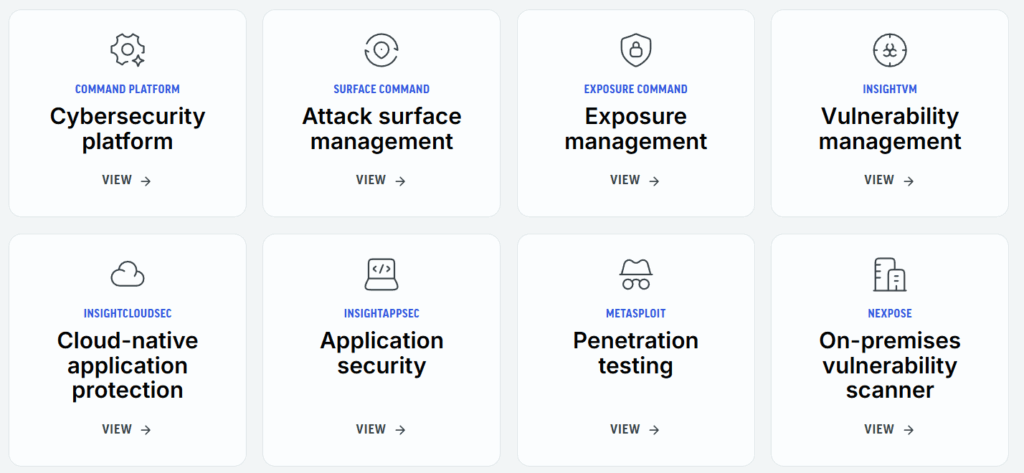
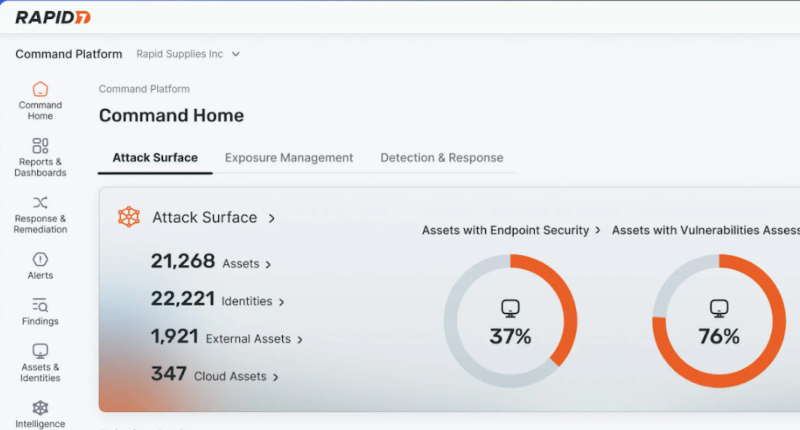
Rapid7’s strength lies in its Insight Platform, which integrates vulnerability management (InsightVM) with orchestration (InsightConnect) and cloud security (InsightCloudSec).
- Active Risk Score (0-1000): As of January 21, 2026, Rapid7 officially deprecated its legacy risk strategies in favor of the Active Risk model. Unlike the 1-10 CVSS scale, this 0-1000 score provides extreme granularity. It combines real-time threat intel from AttackerKB, Metasploit, and Project Heisenberg (their global honeynet) to tell you exactly how “attractive” a vulnerability is to an actual hacker right now. 🎯
- InsightVM & The “Always-On” Agent: Rapid7’s lightweight agent is designed for the modern workforce. In 2026, these agents feature “Self-Healing” capabilities, ensuring they continue to report data even if local services are disrupted. It’s particularly effective for remote teams who rarely connect to the corporate VPN.
- Vector Command & Incident Command (New for 2026): Launched in early 2026, these AI-powered modules provide “Decision Support.” They don’t just show you a list of bugs; they provide a Geopolitical Risk Layer, flagging vulnerabilities that are being targeted by specific nation-state actors based on current global tensions. 🌐
- InsightCloudSec (CNAPP): For 2026, Rapid7 has tightened the integration between on-prem and cloud. It provides Real-Time Automated Remediation (No-Code). For example, if an S3 bucket is misconfigured, Rapid7 can automatically “Bot-fix” it in under 60 seconds without a human clicking a single button.
- Metasploit DNA: Rapid7 owns Metasploit, the world’s most popular penetration testing software. This gives them a unique “Attacker’s Perspective” that is baked into every scan, ensuring you know not just if you are vulnerable, but how you will be hacked.
🔹Key Advantages in 2026:
- Remediation Workflows: Rapid7 wins on “Ease of Use” for IT teams. Its integration with Jira and ServiceNow is built-in and bi-directional when IT patches the server, Rapid7 automatically verifies the fix and closes the ticket. 🛠️
- Cloud-Native Agility: Its agentless cloud scanning (via InsightCloudSec) is exceptionally fast, providing visibility into ephemeral resources (like Kubernetes containers) that live for only a few minutes.

- Contextual Awareness: In 2026, Rapid7 emphasizes “Outcomes over Features.” The platform is designed to show you the “Toxic Combinations” where a small misconfiguration plus a medium vulnerability equals a critical breach path.
Rapid7’s Philosophy: “Speed to resolution.” It is the preferred choice for fast-moving DevOps teams and organizations that prioritize automation and rapid response over purely academic accuracy.
4.) Tenable vs Rapid7: Quick Comparison Table ⚖️
| Decision Factor | Tenable One (Predictive) | Rapid7 (Unified) | The Bottom Line |
|---|---|---|---|
| Core Philosophy | Exposure Management (Predictive, business-aligned risk) | Security Operations (Unified detection, investigation, response) | Tenable forecasts risk. Rapid7 operationalizes response. |
| Signature Strength | Predictive analytics (VPR), OT Security, Business Risk (Lumin) | SecOps Integration (VM + SIEM + SOAR), Attacker Intelligence (Metasploit) | Tenable for breadth & prediction. Rapid7 for workflow unification. |
| Best For Asset Type | OT/IoT, Industrial Systems, Complex Hybrid Estates | Cloud-Native Applications, Modern IT, SOC-Driven Environments | Tenable for factories and hospitals. Rapid7 for tech companies and SaaS providers. |
| Ease of Use & Integration | Can be complex due to broad scope. Integrates with many tools. | Streamlined for analyst workflow. Deep, native integration between its own modules. | Advantage: Rapid7 for seamless cross-team workflow within its ecosystem. |
| Threat Intelligence Source | Tenable Research (proprietary) + external feeds. | Metasploit/IntSights (adversary-focused) + external feeds. | Rapid7 has an edge with hands-on, exploit-focused intelligence. |
| 2026 Focus | AI Exposure Management, Expanding Lumin analytics | Cloud Security & XDR Convergence, Enhancing automation playbooks | Both are evolving to cover the modern attack surface. |
5.) Vulnerability Scanning & Asset Discovery Comparison 🔍📡⚙️
Vulnerability scanning and asset discovery are the foundation of effective security visibility. If assets are missed or scans lack depth, critical risks remain invisible. This is where the differences between Tenable and Rapid7 become very clear in real-world environments.
Tenable is known for its deep, high-accuracy vulnerability scanning, powered by the Nessus engine. It performs detailed assessments across traditional infrastructure, cloud workloads, OT systems, and identity-related assets. Tenable’s strength lies in precision and coverage, making it especially effective in large or regulated environments where false negatives can be costly.
Rapid7 takes a more continuous and dynamic approach. InsightVM constantly discovers new assets as they appear and updates risk data in near real time. Its scanning model is tightly connected with live asset context, which helps teams identify exposure faster in fast-changing environments like cloud, containers, and remote endpoints.
👉 In practical terms:
- Tenable excels when deep scanning accuracy and comprehensive coverage are the priority.
- Rapid7 shines when speed, real-time discovery, and operational visibility matter most.
Your choice here determines whether your security program is optimized for depth or agility both critical, but suited to different environments. 🔐🚨
6.) Risk Prioritization, Threat Intelligence & Accuracy 🎯
With thousands of vulnerabilities in modern environments, prioritization matters more than detection. The real value of a vulnerability management platform lies in how accurately it highlights what needs immediate attention 🚨.
🔹Tenable’s Approach 🧠
Tenable uses Vulnerability Priority Rating (VPR) to rank vulnerabilities based on real-world exploit activity and threat intelligence, not just CVSS scores.
- 🎯 Strong focus on active threats
- 📊 Backed by extensive vulnerability research
- ⚠️ Less emphasis on asset business context by default
🔹Rapid7’s Approach ⚡
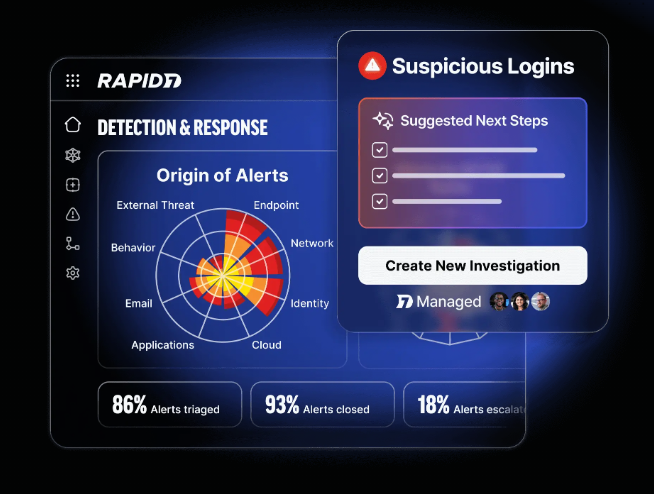
Rapid7 uses Real Risk Score, combining vulnerability severity with asset context and attacker behavior.
- 🔍 Clear, context-aware prioritization
- ⚡ Faster decision-making for lean teams
- ⚠️ Less technical depth for exploit-focused analysis
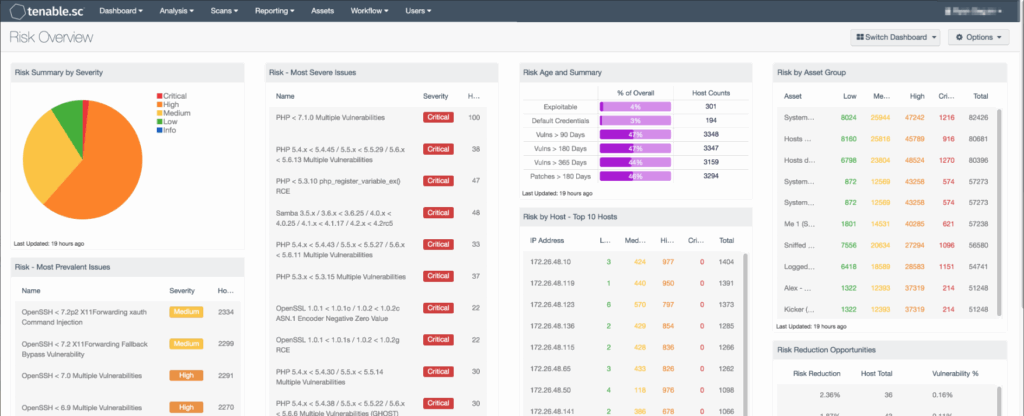
🔹Quick Takeaway 🔐
- Choose Tenable for deep, exploit-driven risk accuracy
- Choose Rapid7 for context-rich, action-oriented prioritization
7.) Remediation, Patch Management & Automation Capabilities
🚀 Remediation closes the loop turning vuln intel into rapid fixes before exploits hit! Tenable and Rapid7 automate at scale, but their workflows target different speeds for 2026’s dynamic threats. ✅
Rapid7 InsightVM leads with InsightConnect’s 250+ plugins, delivering 75% faster remediation through ServiceNow/Jira/Slack orchestration and Metasploit-validated patching ideal for agile SecOps teams chasing live risks. Tenable One counters with Exposure Response SLAs, prescriptive guidance, and attack path blocking across hybrid domains (OT-to-cloud), leveraging 250+ integrations for precise, business-aligned automation.
Head-to-Head Table:
| Capability | Tenable Strength | Rapid7 Strength |
|---|---|---|
| Patch Management | SLA-driven cross-domain orchestration | Metasploit-validated, rapid workflows |
| Automation | 250+ integrations, path blocking | InsightConnect (250+ plugins, 75% faster) |
| Workflow Speed | Comprehensive hybrid coverage | Agile cloud/DevSecOps velocity |
| Validation | Prescriptive guidance + ExposureAI | Pen-testing integration |
Rapid7 owns speed for threat hunters; Tenable masters end-to-end enterprise control. ⚡
To help organizations focus on real-world threats, CISA’s Known Exploited Vulnerabilities Catalog tracks vulnerabilities that are actively exploited by attackers, highlighting why risk-based prioritization is critical.
8.) Cloud, Hybrid & Enterprise Security Capabilities ☁️🏢🔐
Modern organizations rarely operate in a single environment. Most run a mix of on-prem systems, cloud workloads, hybrid infrastructure, and remote endpoints, which makes consistent security visibility a real challenge. This is where the enterprise readiness of Tenable and Rapid7 becomes a key differentiator.
Tenable is designed to handle complex, large-scale enterprise environments. It offers strong coverage across on-prem infrastructure, public and private cloud platforms, OT environments, and identity-based assets. Tenable’s exposure management approach helps enterprises understand risk across the entire attack surface, making it well suited for regulated industries and organizations with mature security programs.
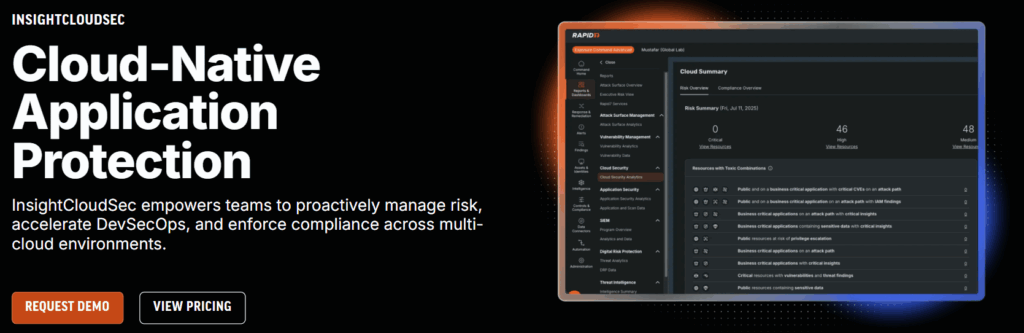
Rapid7 takes a more cloud-first and operations-driven approach. Its SaaS-native platform adapts quickly to dynamic cloud environments and integrates tightly with security operations tools. Rapid7 is especially effective for organizations that want centralized visibility across cloud and hybrid assets, while maintaining close alignment between vulnerability management and incident response.
👉 The practical takeaway:
- Tenable is ideal for large enterprises with complex, hybrid infrastructures.
- Rapid7 fits teams that prioritize cloud agility and SecOps integration.
Your environment type cloud-heavy, hybrid, or enterprise-scale will heavily influence which platform delivers better long-term value. 🔍⚡
9.) Pricing Comparison: Tenable vs Rapid7 (Plans, Cost & Value)
🚀 Demystifying the dollars—Tenable’s enterprise-grade power vs Rapid7’s modular affordability! Both run quote-based pricing (scaling by assets/IPs/users), but 2026 plans reveal stark value differences for hybrid vs cloud teams. ✅
Tenable Pricing Snapshot (Direct from plans):
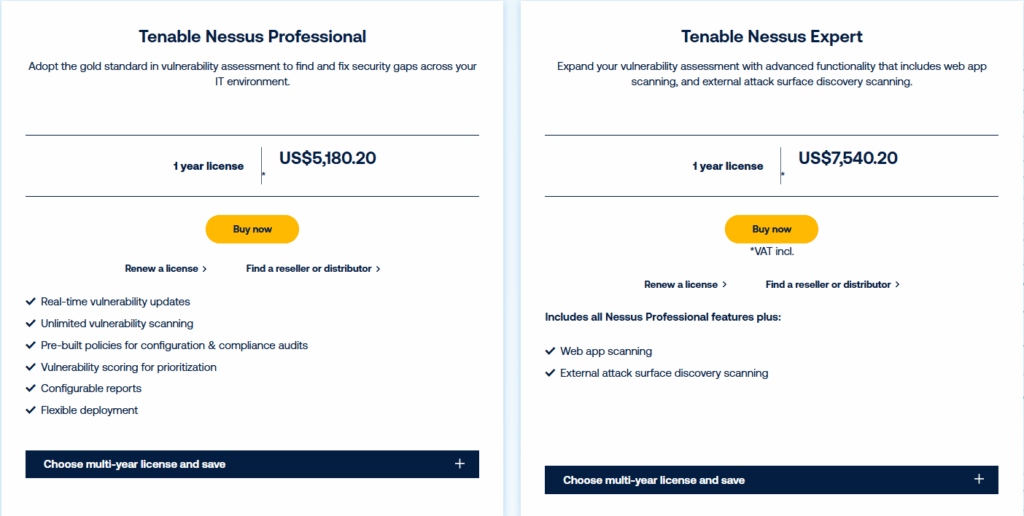
- Nessus Professional: $5,820/year (1 license) standard scanning, compliance audits.
- Nessus Expert: $8,920/year (1 license) adds web apps, external attack surface.
- Tenable One Enterprise: Custom (~$50K+ for 44K assets) AI exposure, OT, full stack.
Asset-based flexibility includes support; premium for comprehensive coverage.
Rapid7 Pricing Highlights (Modular approach):
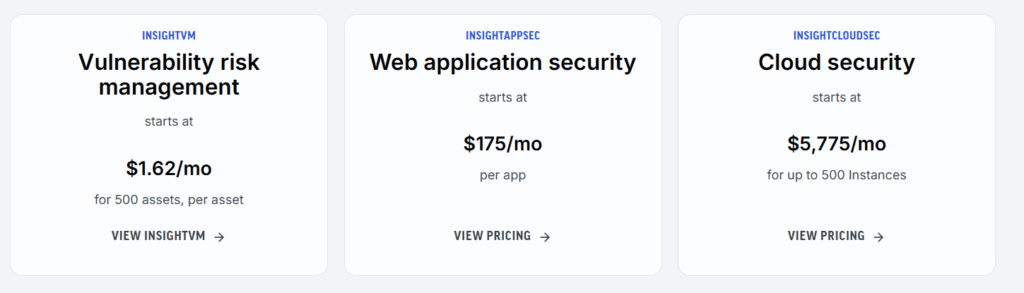
- Vulnerability Management: Starts $1.62/month (500 assets).
- Web App Security: $175/month (per app).
- Cloud Security: $5775/month (up to 500 instances).
Prepaid discounts for scale; mix-and-match for mid-market agility.
Value Breakdown Table:
| Factor | Tenable Advantage | Rapid7 Advantage | Winner |
|---|---|---|---|
| Entry Cost | $5K (Nessus Pro) | $2K/100 IPs | Rapid7 |
| Scaling Model | Asset-based | Per-module, cloud-friendly | Rapid7 |
| What’s included | 300+ plugins, research, integrations | Metasploit, boards, connectors | Tenable |
| Enterprise Value | Unified research, integrations | FlexDeploy, connectors | Tenable |
| Support Trial | Included demos | Free trial, G2 ease | Tie |
Tenable justifies premium for converged US enterprises (OT + ShipChain ops); Rapid7 wins cost-effective cloud velocity. Get custom quotes—your asset mix decides! ⚡
If you’re leaning toward Tenable after this comparison, checking for any available Tenable offer can help you optimize your investment.
10.) Pros, Cons & Final Verdict: Tenable vs Rapid7 🏁
After comparing scanning, risk prioritization, remediation, cloud support, and pricing, the choice between Tenable vs Rapid7 comes down to depth vs speed and control vs simplicity.
🔹Tenable – Pros & Cons
Tenable Pros
- ✓ Industry-leading vulnerability scanning (Nessus) 🔍
- ✓ Strong exploit-driven risk prioritization (VPR) 🎯
- ✓ Excellent for complex, regulated, and hybrid environments 🏢
- ✓ Deep technical and research-backed insights 📊
Tenable Cons
- ✕ Higher cost for advanced enterprise features 💸
- ✕ Limited native patch management ⚙️
- ✕ Steeper learning curve for smaller teams 🧠
🔹Rapid7 – Pros & Cons
Rapid7 Pros
- ✓ Real-time visibility with continuous scanning ⚡
- ✓ Guided remediation and automation 🤖
- ✓ Cloud-first, easy to deploy and manage ☁️
- ✓ Unified platform for VM, AppSec, and CloudSec 🧩
Rapid7 Cons
- ✕ Less granular vulnerability depth than Nessus 🧪
- ✕ Costs increase as assets and modules scale 📈
- ✕ Fewer customization options for legacy-heavy setups ⚙️
Modern attack surfaces extend beyond endpoints and servers APIs now power logistics, ERP systems, and warehouse platforms. Understanding API security risks in supply chain operations helps clarify how these platforms differ in real-world deployments.
Final Verdict 🔐
👉 Choose Tenable if you need deep vulnerability analysis, precise risk intelligence, and strong enterprise control especially in complex or regulated environments.
👉 Choose Rapid7 if you value speed, usability, and real-time insight, and want an integrated, cloud-native security platform with faster remediation.
🥇 FINAL VERDICT: THE 2026 STRATEGIC CHOICE
Choose TENABLE ONE if:
You operate in manufacturing, healthcare, energy, or have significant OT/IoT infrastructure. You need to translate technical risk into boardroom-ready business metrics and value predictive, proactive risk management. You have a complex, hybrid asset environment that defies simple categorization.
Choose RAPID7 INSIGHT PLATFORM if:
You run a mature Security Operations Center (SOC) and want to break down silos between vulnerability management, threat detection, and response. You are cloud-first and DevOps-centric. You value attacker-focused intelligence and want to automate remediation playbooks natively.
Bottom Line:
You are choosing between a Risk Intelligence Platform (Tenable) and a SecOps Workflow Platform (Rapid7). Tenable helps you understand and predict risk across everything you own. Rapid7 helps your team find and fix threats efficiently in your IT and cloud environments.
Your Next Step: Define your primary mission. Is it to provide comprehensive business risk reporting and cover every asset type? Lean Tenable. Is it to empower your SOC with faster investigation and response? Lean Rapid7. Then, request a PoC that tests these core philosophies against your own data.
“RELATED ARTICLE”
- Tenable vs Qualys 2026: Which Vulnerability Tool Is Better?
- What Is Cyber Exposure Management & Why Businesses Need It
Frequently Asked Questions (FAQs) ❓
1. Which tool is more expensive in 2026?
Tenable is generally perceived as a premium product with costs based on IPs. Rapid7 offers tiered rates starting around $2.19/asset/month, which can be more cost-effective for larger deployments.
2. Does Tenable support automated patching?
Yes, Tenable has integrated remediation workflows, but Rapid7’s InsightConnect orchestration is often cited as more flexible for complex automation across third-party tools.
3. Which is better for cloud-native security?
Both have evolved significantly. Tenable offers broad framework coverage, while Rapid7’s InsightCloudSec provides more customizable options and integration flexibility for unique security workflows.
4. Is Tenable better than Rapid7 for vulnerability scanning?
Tenable is generally better for deep, highly detailed vulnerability scanning, especially in complex and regulated environments. Its Nessus engine is known for accuracy and depth.
5. Is Rapid7 easier to use than Tenable?
Yes. Rapid7 is widely considered easier to deploy and use, thanks to its cloud-first design, real-time dashboards, and guided remediation workflows.