

CrowdStrike is one of the biggest names in endpoint security no doubt about it. Their Falcon platform is powerful, their threat intelligence is top-notch, and they’re trusted by Fortune 500 companies worldwide. 🦅
But here’s the reality: CrowdStrike isn’t perfect for everyone.
Maybe you’re dealing with sticker shock from their pricing. Maybe the platform feels too complex for your team size. Or maybe you just want to explore what else is out there before committing to a multi-year contract. Whatever your reason, you’re smart to look around.
In this guide, I’m breaking down the 5 best CrowdStrike alternatives in 2026 real platforms that can actually compete on features, security effectiveness, and value. No fluff, no vendor bias, just honest comparisons to help you make the right call.
Let’s dive in! 🚀
🔍 1. What Are the Best CrowdStrike Alternatives?
The 5 best CrowdStrike alternatives in 2026 are:
- Tenable One – Best for vulnerability management and exposure tracking
- SentinelOne Singularity – Best for autonomous AI-driven EDR without cloud dependency
- Microsoft Defender for Endpoint – Best for organizations heavily invested in Microsoft ecosystem
- Palo Alto Cortex XDR – Best for network-centric security with unified visibility
- Trend Micro Vision One – Best for small to mid-sized teams needing simplified XDR
Each platform has unique strengths. Your best choice depends on your infrastructure, team size, budget, and specific security needs. We’ll break down all of this below. 👇
⚠️ 2. Why Businesses Look for CrowdStrike Alternatives
Don’t get me wrong—CrowdStrike is excellent at what it does. But it’s not a perfect fit for every organization. Here’s why companies actively seek alternatives:
💰 High Pricing (The Elephant in the Room)
CrowdStrike’s pricing isn’t publicly available, but industry reports suggest it’s one of the more expensive EDR solutions out there. For SMBs or companies with tight security budgets, the cost can be prohibitive.
Real scenario: A 200-employee company might pay $30K-$60K+ annually for CrowdStrike. Smaller alternatives can cut that cost by 30-50%. 💸
🧩 Complexity and Learning Curve
CrowdStrike Falcon is feature-rich, which is great for large security teams. But for smaller teams or those without dedicated SOC analysts, it can feel overwhelming.
The struggle: Setting up policies, tuning alerts, and interpreting threat intelligence requires expertise. Not every company has that bandwidth.
🔧 Customization Needs
Some organizations need highly customized security policies or integrations that don’t fit CrowdStrike’s standardized approach. Alternatives might offer more flexibility.

🌐 Regional or Industry-Specific Requirements
Certain industries (healthcare, finance, government) or regions (EU with GDPR, Asia-Pacific markets) sometimes prefer vendors with specific certifications or local data residency options that align better with their needs.
🎯 Different Security Philosophy
CrowdStrike is heavily endpoint-focused. Some organizations want more network-centric visibility (hello, Palo Alto) or prefer platforms that integrate tightly with their existing tech stack (Microsoft fans, this is you). 🖥️
Bottom line: CrowdStrike is powerful, but (it’s not the perfect fit for every company). That’s not a weakness—it’s just reality.
🧠 3. How We Selected the Best CrowdStrike Alternatives
We didn’t just pick random cybersecurity vendors. Here’s our selection criteria to ensure this list is actually useful:
✅ Proven Security Effectiveness
Platforms must have documented success in detecting and responding to real-world threats, not just marketing claims.
✅ Industry Recognition
Included in Gartner Magic Quadrant, Forrester Wave, or MITRE ATT&CK evaluations for endpoint/XDR security.
✅ Real-World Adoption
Used by actual enterprises, not just startups. We looked for platforms with substantial customer bases and case studies.
✅ Feature Parity (or Close Enough)
Must offer core capabilities comparable to CrowdStrike: EDR, threat intelligence, automated response, and integration options.
✅ Different Value Propositions
Each alternative brings something unique whether it’s pricing, ease of use, specialization, or ecosystem integration.
✅ Current and Maintained
Platforms actively developed in 2026 with regular updates, not legacy solutions coasting on old reputation.
Trust factor: I’ve researched user reviews (Gartner Peer Insights, G2), consulted security professionals, and analyzed independent testing results. This isn’t just vendor website copy. 🔍
🏆 5 Best CrowdStrike Alternatives (Expert Picks)
Here’s the full breakdown of each alternative, what makes them strong, and who they’re best for.
🥇 Tenable One — Best for Vulnerability Management
🔹Why Tenable Is a Strong CrowdStrike Alternative
Tenable takes a different approach than pure EDR platforms. While CrowdStrike focuses on endpoint detection and response, Tenable One is built around exposure management—understanding your entire attack surface, not just reacting to threats. 🎯
If your security strategy prioritizes preventing breaches by closing vulnerabilities before attackers exploit them, Tenable is a serious contender.
🔹Key Features Explained
🔍 Exposure Management Platform
Tenable maps your entire attack surface—endpoints, cloud assets, web apps, containers, OT systems—and continuously assesses risk exposure. You see what’s vulnerable, what’s exploitable, and what needs fixing now.
📊 Risk-Based Prioritization
Not all vulnerabilities are equal. Tenable uses predictive analytics and threat intelligence to rank risks based on actual exploit likelihood. You fix what matters first instead of drowning in CVE alerts.
🌐 Comprehensive Asset Coverage
Goes beyond endpoints. Covers:
- Traditional IT infrastructure ✅
- Cloud environments (AWS, Azure, GCP) ☁️
- Active Directory and identity systems 🔐
- IoT and OT devices 🏭
- Web applications and APIs 🌍
🤖 Integration with EDR/XDR
Tenable doesn’t replace EDR entirely—it complements it. You can integrate Tenable vulnerability data with your existing EDR (including CrowdStrike, ironically) for richer context.
📈 Security Metrics and Reporting
Executive-friendly dashboards show security posture trends, compliance status, and risk reduction over time. Great for communicating with non-technical leadership.
🔹Pros and Cons
Pros ✅
- Proactive vulnerability management prevents attacks before they happen
- Best-in-class risk prioritization reduces alert fatigue
- Excellent coverage across hybrid and multi-cloud environments
- Strong compliance reporting (PCI-DSS, HIPAA, SOC 2, etc.)
- Good for organizations with complex, distributed infrastructure
Cons ❌
- Not a pure EDR replacement—you’ll likely need both vulnerability management AND endpoint protection
- Can be overwhelming for small teams without dedicated vulnerability management processes
- Pricing is per-asset, which can get expensive for large environments
- Requires skilled analysts to interpret findings and prioritize remediation
- Scanning frequency and coverage depends on your plan tier
🔹Best For
✅ Enterprises with complex infrastructure (multiple clouds, legacy systems, OT environments)
✅ Organizations prioritizing proactive security over reactive incident response
✅ Compliance-heavy industries (healthcare, finance, government) needing detailed audit trails
✅ Security teams that want to reduce exploitable attack surface systematically
Not ideal for: Small businesses looking for simple endpoint protection, or companies that need pure EDR/XDR capabilities without vulnerability management.
Pricing: Custom quotes based on asset count. Expect enterprise-level pricing, though often more cost-effective than CrowdStrike for large environments. 💰
🤖 SentinelOne Singularity — Best for Autonomous EDR
🔹Why SentinelOne Is a Strong Alternative
SentinelOne is probably the most direct CrowdStrike competitor on this list. Both are cloud-native EDR platforms with strong AI capabilities. The key difference? SentinelOne emphasizes autonomous detection and response their AI can detect, investigate, and remediate threats without requiring constant cloud connectivity. 🧠
If you want CrowdStrike-level protection with more flexible deployment options and competitive pricing, SentinelOne is your top pick.
🔹Key Features Explained
🤖 Autonomous AI Engine
SentinelOne’s Storyline engine uses behavioral AI to detect threats in real-time. Unlike signature-based detection, it identifies malicious behavior patterns even zero-day attacks and fileless malware.
⚡ Automated Response Actions
When a threat is detected, SentinelOne can automatically:
- Quarantine infected endpoints 🚨
- Kill malicious processes ❌
- Roll back ransomware encryption 🔄
- Network-isolate compromised devices 🔒
You can set these to auto-execute or require analyst approval.
🌐 Works Offline (Cloud Optional)
Unlike purely cloud-dependent EDR, SentinelOne agents can operate independently. Detection and response happen on the endpoint itself, even if cloud connectivity is lost. Great for remote sites or air-gapped environments.
🔗 Extended Detection and Response (XDR)
Singularity XDR integrates endpoint data with cloud, identity, and network telemetry for unified threat visibility. Think of it as CrowdStrike Falcon + network monitoring in one platform.
🛡️ Ranger for IoT Discovery
Automatically discovers and secures unmanaged/rogue devices on your network (IoT gadgets, BYOD, shadow IT). You can’t protect what you don’t know exists.
🔄 Rollback and Remediation
Unique feature: If ransomware encrypts files, SentinelOne can restore them to pre-attack state. Not all EDR platforms offer this. 🎉
🔹Pros and Cons
Pros ✅
- Excellent autonomous detection with minimal false positives
- Strong protection against ransomware, including rollback capability
- Works offline—doesn’t require constant cloud access
- Competitive pricing compared to CrowdStrike
- User-friendly interface; easier learning curve than Falcon
- Consistently high scores in MITRE ATT&CK evaluations
- Good for distributed/remote workforces
Cons ❌
- Threat intelligence not as extensive as CrowdStrike’s
- Fewer third-party integrations compared to market leaders
- Some users report occasional agent performance impact on older hardware
- Advanced XDR features require higher-tier licensing
- Less mature ecosystem compared to CrowdStrike’s partners/integrations
🔹Best For
✅ Organizations wanting CrowdStrike-level EDR without the premium price 💵
✅ Companies with remote sites or limited cloud connectivity (manufacturing, retail, field operations)
✅ Teams needing strong ransomware protection with automated rollback
✅ Mid-sized enterprises (100-5,000 employees) looking for powerful but manageable security
✅ Security teams that value autonomous response over manual SOC workflows
Not ideal for: Organizations deeply invested in CrowdStrike’s threat intelligence ecosystem, or those needing the absolute broadest third-party integration catalog.
💡 Insight: SentinelOne’s autonomous EDR can detect and respond to threats without cloud dependency, making it ideal for distributed environments or situations where connectivity isn’t guaranteed. 🌍
Pricing: Typically 20-30% less expensive than CrowdStrike for comparable features. Exact pricing varies, but expect $40-$80 per endpoint annually depending on tier and volume.
🪟 Microsoft Defender for Endpoint — Best for Microsoft Ecosystem
🔹Why Microsoft Defender Is a Strong Alternative
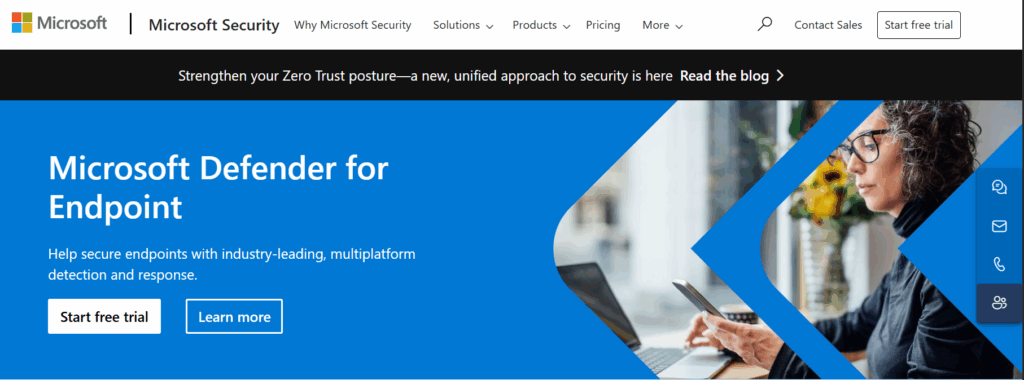
If your organization runs primarily on Microsoft technologies—Windows endpoints, Azure cloud, Microsoft 365, Active Directory—then Microsoft Defender for Endpoint might be the most logical CrowdStrike alternative. 🖥️
Why pay for a separate EDR when Microsoft already provides enterprise-grade protection that integrates natively with your entire stack?
🔹Key Features Explained
🔗 Native Microsoft Integration
Seamless integration with:
- Windows 10/11 and Windows Server 🪟
- Azure AD and identity management 🔐
- Microsoft 365 (email, collaboration tools) 📧
- Azure cloud workloads ☁️
- Microsoft Sentinel (SIEM) 📊
Everything works together without complex integration projects.
🧠 Threat Intelligence from Microsoft
Microsoft analyzes 43 trillion security signals daily across their ecosystem. This threat intel feeds directly into Defender, giving you protection based on global attack patterns.
🛡️ Advanced Threat Protection (ATP)
Features include:
- Behavioral-based detection (not just signatures) 🎯
- Attack surface reduction rules 🛡️
- Next-gen antivirus with cloud-delivered protection ☁️
- Automated investigation and remediation 🤖
📊 Microsoft 365 Defender (XDR)
Combines endpoint, email, identity, and app security into unified XDR platform. Single pane of glass for all Microsoft security telemetry.
🔍 Threat & Vulnerability Management
Built-in vulnerability scanning and exposure assessment. You don’t need a separate tool like Tenable for basic vuln management.
💰 Licensing Efficiency
If you already have Microsoft E5 licenses, Defender for Endpoint is included. No additional per-seat EDR cost. Huge potential savings. 💸
🔹Pros and Cons
Pros ✅
- Often already included in existing Microsoft licenses (E5, standalone licenses available too)
- Deep integration with Microsoft ecosystem = less complexity
- Leverages Microsoft’s massive threat intelligence network
- No additional agent deployment if using Windows (built into OS)
- Unified XDR when combined with other Microsoft 365 Defender components
- Excellent for hybrid cloud environments (on-prem + Azure)
- Regular updates and improvements from Microsoft
Cons ❌
- Less effective on non-Windows endpoints (macOS, Linux support exists but is weaker)
- Can feel like “vendor lock-in” to Microsoft ecosystem
- Interface can be complex; Microsoft’s security portal is powerful but not always intuitive
- Threat response automation not as advanced as SentinelOne or CrowdStrike
- Some advanced features require E5 licensing (expensive for SMBs)
- Third-party integrations more limited than platform-agnostic EDR
🔹Best For
✅ Microsoft-heavy organizations (Windows endpoints, Azure cloud, M365 apps) 🪟
✅ Companies already on Microsoft E5 licensing (you might already own it!)
✅ Enterprises wanting unified security across identity, endpoint, email, and cloud
✅ IT teams comfortable with Microsoft tools and interfaces
✅ Budget-conscious organizations looking to maximize existing licenses
Not ideal for: Multi-cloud environments with AWS/GCP dominance, organizations with significant macOS/Linux endpoints, or companies wanting best-of-breed EDR independent of infrastructure vendor.
💡 Insight: Microsoft is consistently ranked among top XDR leaders globally by Forrester and Gartner. Their investment in security R&D is massive, and they’re closing the gap with specialized vendors quickly. 📈
Pricing:
- Included with Microsoft 365 E5 (full enterprise suite ~$57/user/month)
- Standalone Defender for Endpoint Plan 1: ~$3-$5/user/month
- Standalone Defender for Endpoint Plan 2: ~$5-$10/user/month
- Significantly cheaper than CrowdStrike if you’re already in Microsoft ecosystem
🌐 Palo Alto Cortex XDR — Best for Network-Centric Security
🔹Why Cortex XDR Is a Strong Alternative
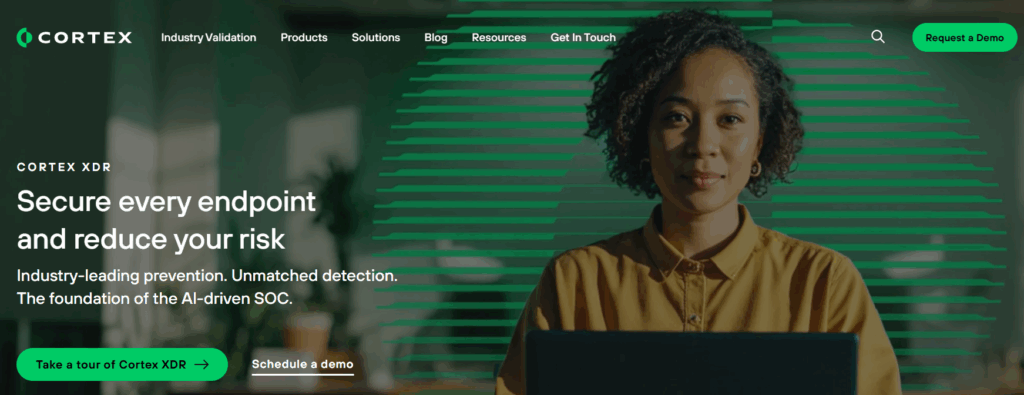
Palo Alto Networks built their reputation on next-gen firewalls. Cortex XDR extends that network-centric security philosophy into endpoint detection and response. 🔥
If your organization values network visibility just as much as endpoint protection, and you want a platform that correlates threats across both layers, Cortex XDR is a compelling choice.
🔹Key Features Explained
🌐 Network + Endpoint + Cloud Correlation
Cortex XDR doesn’t just watch endpoints—it analyzes:
- Endpoint activity (processes, files, registry changes) 💻
- Network traffic patterns 🌍
- Cloud workload behavior ☁️
- User and entity behavior analytics (UEBA) 👤
Threats are detected by correlating signals across all these data sources, not just endpoint telemetry.
🔗 Native Integration with Palo Alto Products
If you’re running Palo Alto firewalls (many enterprises are), Cortex XDR provides seamless integration:
- Threat intelligence sharing 🔄
- Coordinated response (firewall blocks + endpoint isolation) 🛡️
- Unified management console 📊
🤖 Behavioral Threat Detection
Uses machine learning to establish baseline behavior for users and devices. Anomalies trigger alerts—great for detecting insider threats and advanced persistent threats (APTs).
⚡ Automated Incident Response
Pre-built playbooks automate common response actions:
- Isolate infected endpoints 🚨
- Block malicious IPs at firewall level 🔒
- Quarantine files ❌
- Generate investigation timelines 📈
📊 Causality and Attack Chain Analysis
Cortex XDR doesn’t just show isolated alerts. It builds “attack stories” showing how an intrusion unfolded across time and systems. Makes investigations much faster. 🔍
🏢 Built for Enterprises
Cortex XDR is designed for large, complex environments. Scalable architecture handles tens of thousands of endpoints without performance degradation.
🔹Pros and Cons
Pros ✅
- Exceptional network visibility combined with endpoint protection
- Superior threat correlation across endpoints, network, and cloud
- Excellent for enterprises already using Palo Alto firewalls
- Strong behavioral analytics and anomaly detection
- Highly scalable for large deployments
- Good integration with third-party security tools (SIEM, SOAR, etc.)
- Attack chain visualization makes investigations easier
Cons ❌
- Expensive—pricing is on par with or exceeds CrowdStrike
- Complexity: requires skilled analysts to configure and manage effectively
- Steep learning curve for teams new to Palo Alto ecosystem
- Less effective if you’re not using Palo Alto network infrastructure (you lose integration benefits)
- Can be overkill for SMBs or organizations with simpler security needs
- Reporting and dashboards can feel overwhelming
🔹Best For
✅ Large enterprises with complex, distributed networks 🏢
✅ Organizations already invested in Palo Alto firewalls/network security
✅ Security teams wanting unified visibility across network + endpoint + cloud
✅ Companies dealing with sophisticated threats (APTs, targeted attacks)
✅ Environments where network-level detection is critical (financial services, critical infrastructure)
Not ideal for: Small businesses, organizations without dedicated security operations centers, or companies looking for simple endpoint-only protection.
💡 Insight: Cortex XDR provides deep visibility across your entire security stack—not just endpoints. If threats move laterally through your network, you’ll see the full attack path, not just isolated alerts. 🕸️
Pricing: Enterprise-level pricing, typically requires custom quote. Expect costs similar to or slightly higher than CrowdStrike, especially when bundling with Palo Alto network products. 💰
⚡ Trend Micro Vision One — Best for Small & Lean Security Teams
🔹Why Trend Micro Is a Strong Alternative
Trend Micro has been in cybersecurity since the 1980s—they’re not newcomers. Vision One is their modern XDR platform designed to give smaller security teams enterprise-grade protection without enterprise-level complexity. 🎯
If you want powerful security but don’t have a 24/7 SOC or dedicated threat analysts, Vision One makes advanced threat detection accessible.

🔹Key Features Explained
🤖 AI-Powered Threat Detection
Vision One uses machine learning and behavioral analysis to detect threats, including:
- Zero-day exploits 🔓
- Fileless malware 👻
- Ransomware attacks 🔒
- Living-off-the-land attacks (using legitimate tools maliciously) 🛠️
📊 Simplified XDR Dashboard
Unlike some XDR platforms that feel like flying a spaceship, Vision One’s interface is designed for accessibility. Security alerts are prioritized and explained in plain language. Great for teams without deep security expertise.
🔗 Cross-Layer Detection and Response
Correlates threats across:
- Endpoints (Windows, macOS, Linux) 💻
- Email (phishing, BEC attacks) 📧
- Cloud workloads (AWS, Azure, GCP) ☁️
- Network activity 🌐
- Servers (physical and virtual) 🖥️
⚙️ Risk Insights and Attack Surface Management
Continuously scans for vulnerabilities, misconfigurations, and exposed assets. Prioritizes risks based on exploitability and business impact.
🚀 Guided Investigation and Response
When threats are detected, Vision One provides step-by-step investigation guides and recommended response actions. You’re not left figuring out “what do I do now?” on your own.
🌍 Global Threat Intelligence
Trend Micro’s Smart Protection Network analyzes billions of threats globally. This intelligence feeds into Vision One’s detection models.
🔹Pros and Cons
Pros ✅
- Designed for lean teams—automation reduces manual work
- User-friendly interface compared to enterprise-focused platforms
- Strong email security integration (Trend Micro’s legacy strength)
- Good detection rates with low false positive rates
- Competitive pricing for SMBs and mid-market
- Comprehensive coverage (endpoint, email, cloud, network)
- Excellent customer support and onboarding assistance
Cons ❌
- Not as feature-rich as CrowdStrike or Palo Alto for advanced use cases
- Less customization flexibility—more “opinionated” in its approach
- Smaller third-party integration ecosystem
- Threat intelligence depth not quite on par with CrowdStrike’s Falcon Intel
- Some advanced XDR features require higher-tier licensing
- Less brand recognition in some markets compared to bigger names
🔹Best For
✅ Small to mid-sized businesses (50-1,000 employees) 🏢
✅ Organizations with lean security teams (1-3 people handling security)
✅ Companies needing good protection without complexity
✅ Businesses prioritizing email security alongside endpoint protection
✅ Teams wanting guided investigation and response instead of figuring everything out manually
Not ideal for: Large enterprises with dedicated SOCs needing maximum customization, or organizations requiring cutting-edge threat intelligence and research.
💡 Insight: Vision One uses AI + behavioral analysis to detect threats that traditional signature-based tools miss. Perfect for small teams that need smart automation, not just more alerts. 🧠
Pricing: Generally more affordable than CrowdStrike, SentinelOne, or Palo Alto. Expect around $30-$60 per endpoint annually depending on tier and features. Good value for SMBs. 💵
⚔️ 10. CrowdStrike vs Alternatives (Quick Comparison)
Let’s be real about where CrowdStrike still wins and where alternatives have advantages.
Where CrowdStrike Wins 🏆
🧠 Threat Intelligence
CrowdStrike’s threat intelligence team and research are industry-leading. If you need the absolute best threat intel, CrowdStrike is hard to beat.
🌐 Ecosystem and Integrations
Hundreds of third-party integrations, active partner ecosystem, and widespread industry adoption mean CrowdStrike plays well with almost everything.
📊 Advanced Threat Hunting
For security teams that actively hunt threats (not just react to alerts), CrowdStrike’s tools and visibility are exceptional.
🎯 Brand Trust and Market Leadership
Being a market leader means extensive documentation, community support, analyst reports, and proven track record at enterprise scale.
Where Alternatives Win 🎯
💰 Pricing
Almost every alternative on this list costs less than CrowdStrike for comparable feature sets. SentinelOne, Microsoft Defender, and Trend Micro offer significant savings.
🛠️ Ease of Use
SentinelOne and Trend Micro have more intuitive interfaces. Teams without dedicated security analysts find them easier to manage.
🔗 Specialized Strengths
- Tenable: Best vulnerability management and exposure tracking
- Microsoft Defender: Unbeatable Microsoft ecosystem integration
- Palo Alto Cortex XDR: Superior network-centric visibility
- SentinelOne: Autonomous response without cloud dependency
- Trend Micro: SMB-friendly with great email security
⚙️ Flexibility
Some alternatives offer more deployment flexibility (on-prem, air-gapped, hybrid) compared to CrowdStrike’s cloud-native architecture.
📈 Value for SMBs
For smaller organizations, alternatives like Microsoft Defender (often already licensed) or Trend Micro Vision One deliver better bang for buck.
Quick Decision Matrix
| Your Priority | Best Alternative |
|---|---|
| Lowest cost | Microsoft Defender (if already licensed) |
| Autonomous AI protection | SentinelOne Singularity |
| Network visibility | Palo Alto Cortex XDR |
| Vulnerability focus | Tenable One |
| Easy for small teams | Trend Micro Vision One |
| Microsoft ecosystem | Microsoft Defender |
| CrowdStrike parity | SentinelOne |
💡 11. Which CrowdStrike Alternative Should You Choose?
Still not sure? Let me simplify the decision based on your situation.
🏢 For Large Enterprises (5,000+ employees)
Choose: Palo Alto Cortex XDR or SentinelOne Singularity
Why: You need scalability, advanced features, and enterprise-grade support. Both platforms handle massive deployments and offer sophisticated threat correlation.
Bonus: If you’re already on Palo Alto firewalls → Cortex XDR. If you want CrowdStrike-level features at lower cost → SentinelOne.
🏪 For SMBs (50-500 employees)
Choose: Trend Micro Vision One or Microsoft Defender
Why: You need effective protection without overwhelming complexity or enterprise pricing. Both are accessible for lean teams.
Bonus: If you’re on Microsoft 365 E5 → Defender (might be free!). If not → Trend Micro for simplicity.
🌍 For Global/Distributed Organizations
Choose: SentinelOne Singularity
Why: Autonomous protection works even when cloud connectivity is spotty. Perfect for remote sites, manufacturing facilities, retail locations, or field operations. 🌐
🤖 For Teams Wanting Maximum Automation
Choose: SentinelOne Singularity or Microsoft Defender
Why: Both offer strong autonomous response capabilities. Set policies once, let AI handle detection and remediation automatically.
🔐 For Compliance-Heavy Industries
Choose: Tenable One + (EDR of choice)
Why: Vulnerability management and compliance reporting are critical. Tenable excels here. Pair with SentinelOne or Microsoft Defender for complete protection. 🏥
💸 For Budget-Conscious Organizations
Choose: Microsoft Defender (if already licensed) or Trend Micro Vision One
Why: Best value for money. Microsoft might cost you nothing extra. Trend Micro delivers solid protection at SMB-friendly pricing. 💰
⭐ 12. Final Verdict
CrowdStrike is excellent, but it’s not your only option and in many cases, alternatives deliver better value, simpler management, or more specialized capabilities. 🎯
Here’s the honest truth:
✅ SentinelOne is the closest direct competitor with comparable features at lower cost
✅ Microsoft Defender is unbeatable value if you’re already in the Microsoft ecosystem
✅ Palo Alto Cortex XDR gives you network + endpoint visibility that CrowdStrike can’t match alone
✅ Tenable One addresses vulnerability management that pure EDR platforms don’t cover
✅ Trend Micro Vision One makes enterprise-grade security accessible to small teams
My recommendation: Don’t choose based on brand name alone. Evaluate 2-3 alternatives, run POCs (proof of concepts) if possible, and pick the platform that fits your actual needs not just the one with the fanciest marketing. 🚀
Most vendors offer free trials or demos. Take advantage of them before committing. Your security stack should work for you, not the other way around.
Must Read:-
❓ FAQs
Q: Is SentinelOne better than CrowdStrike?
A: Not objectively “better,” but SentinelOne offers similar capabilities at lower cost with autonomous offline protection. CrowdStrike has superior threat intelligence. Best choice depends on your priorities.
Q: Can Microsoft Defender replace CrowdStrike?
A: Yes, if you’re heavily invested in Microsoft ecosystem. Defender for Endpoint provides enterprise-grade EDR, especially when combined with Microsoft 365 Defender XDR components.
Q: Which is cheaper: CrowdStrike or SentinelOne?
A: SentinelOne is typically 20-30% less expensive than CrowdStrike for comparable features. Exact pricing varies by deployment size and licensing tier.
Q: Do I need both Tenable and an EDR platform?
A: Ideally, yes. Tenable focuses on vulnerability management (preventing attacks), while EDR handles detection and response (stopping active attacks). They’re complementary, not alternatives.
Q: What’s the best EDR for small businesses?
A: Trend Micro Vision One or Microsoft Defender for Endpoint. Both offer strong protection without overwhelming complexity or enterprise-level pricing.