

Traditional cybersecurity focused on building walls firewalls, antivirus, patch management reacting to known threats one at a time. 🏰
But 2026’s digital world moves too fast: attackers chain multiple small gaps into devastating breaches within hours, exploiting cloud misconfigs, stolen credentials, or unpatched OT gear before teams notice. ⚠️
Cyber exposure management emerges as the essential shift proactively mapping, prioritizing, and shrinking the full range of entry points attackers see, turning chaotic alerts into focused business protection.
📌 What Does Cyber Exposure Really Mean? 🔍🎯
Cyber exposure captures every realistic pathway hackers use to reach your critical assets not isolated software bugs, but the full combination creating dangerous access. 🚪
Vulnerabilities represent single weak locks (like outdated Windows letting code execute), alerts act as scattered smoke detectors blaring constantly, but exposure reveals the entire compromised perimeter multiple flaws linking to form highway to your data centers, customer records, or production lines.
Real-World Examples That Clarify 💡
Take a retail giant processing $1B quarterly: scanners flag 25,000 “vulnerabilities” across systems. Exposure analysis narrows to 350 paths leading directly to payment gateways via internet-exposed servers. Fix those 350 first saves millions; ignore the rest safely. 🛒
Manufacturing example: an OT sensor reports “medium risk” vuln in isolation. Exposure mapping shows it communicating unsecured with main inventory database—one hop to supply chain control. Suddenly “medium” becomes company-stopping crisis. 🏭
Office scenario: publicly searchable SaaS admin account holds no traditional “vuln,” but represents pure exposure. Google finds it; attacker takes over, owns Slack channels leading to sensitive files. Exposure quantifies: likelihood high, business impact catastrophic. 📱

Why Counts Mislead Exposure Prioritizes Truth 📊
Security teams drown under 150K+ alerts annually; research shows 97% prove noise or low-impact. Raw vuln scores (CVSS 0-10) treat all flaws equal a “critical” bug on air-gapped test server equals exposed payroll portal.
Exposure flips this: algorithms weigh your specific context asset criticality (revenue-generating apps first), exploit likelihood (actively weaponized flaws), attacker paths (cloud→API→database).
Result? Focus top 3% risks yielding 70% risk reduction. Practical output: dashboards ranking “Fix these 10 = prevent $5M breach.” No IT-speak needed business leaders grasp instantly. 🎯
📌 Why Traditional Security Models Are No Longer Enough ❌
The traditional approach to cybersecurity created a fundamental problem: too much noise, not enough signal. Security teams became overwhelmed by disconnected tools, each generating its own alerts with little coordination or prioritization.
Consider a typical enterprise security operation. Your vulnerability scanner identifies thousands of CVEs across your environment. Your cloud security tool flags hundreds of misconfigurations.
Your identity management system reports excessive permissions. Each tool screams for attention, but none of them talk to each other. Which alert do you address first?
This siloed approach creates three critical failures:

Alert fatigue becomes inevitable. When security analysts receive hundreds or thousands of alerts daily, they can’t possibly investigate them all. Important warnings get lost in the noise. 📢
Risk prioritization becomes guesswork. Without understanding how different security issues relate to each other and your business operations, prioritization relies on generic severity scores that don’t account for business context.
The big picture disappears. When each tool operates in isolation, security teams miss the relationships that matter most. An identity with excessive permissions might seem like a minor issue. A cloud storage bucket with public access might appear to be a configuration oversight. But together, they could provide an attacker a direct path to your customer data.
Meanwhile, attackers don’t operate within these artificial boundaries. They look at your entire attack surface holistically, searching for any combination of weaknesses they can chain together. 🔗
📌 How the Modern Attack Surface Has Expanded 🌐📈
1️⃣ Cloud Migration’s Unseen Chaos ☁️🚀
Enterprise cloud adoption hit 94% by 2025 hybrid environments spawn 150+ resources daily (VMs, storage buckets, serverless functions, containers). Shadow IT thrives; marketing teams spin rogue S3 buckets holding PII. One Fortune 500 discovered 28K forgotten Azure storage accounts post-migration, 15% publicly exposed. Daily drift adds 2% new risks automatically.
2️⃣ Remote Work’s Global Scatter 💻🌍
Pre-pandemic: 100% office endpoints. Now: laptops roam airports, home routers expose VPN tunnels, BYOD blurs corporate/personal. 73% breaches begin with compromised credentials coffee shop WiFi becomes entry point. Mobile apps carry enterprise data unsecured.
3️⃣ SaaS Explosion Creates Minefields 🔌
200+ SaaS apps per enterprise average (Slack, Salesforce, Workday, Zoom). OAuth misconfigurations grant third-party apps full domain access. Supply chain attacks via trusted vendors strike 61% organizations yearly single vendor breach ripples enterprise-wide.

4️⃣ OT/IT Convergence Opens Factory Doors ⚙️🏭
Manufacturing connects assembly line PLCs to ERP systems for real-time inventory. Legacy Windows XP gear never patched meets modern IT networks. Ransomware halts conveyors ($190K/hour average). IoT sensors monitoring temps transmit plaintext to cloud dashboards.
5️⃣ APIs and Identities The Glue & The Weakness 🔗👤
APIs connect everything public endpoints leak if rate-limiting fails. Identities fuel 81% breaches: service accounts never rotate passwords, dormant domain admin creds wait discovery. Hybrid Active Directory + Entra ID creates overlap gaps.
6️⃣ The Numbers Don’t Lie 📊
Attack surface expanded 100x past decade: 100 servers → 100K+ assets (endpoints + cloud + OT + identities + APIs). Attackers thrive in complexity; manual monitoring impossible.
📌 The Different Types of Exposure Businesses Face 🎯🔄
Modern enterprises face cyber exposure across four critical domains—each with unique characteristics, business consequences, and attacker preferences. 🔗 Understanding these categories reveals how risks compound across your attack surface, creating dangerous pathways attackers chain together strategically.
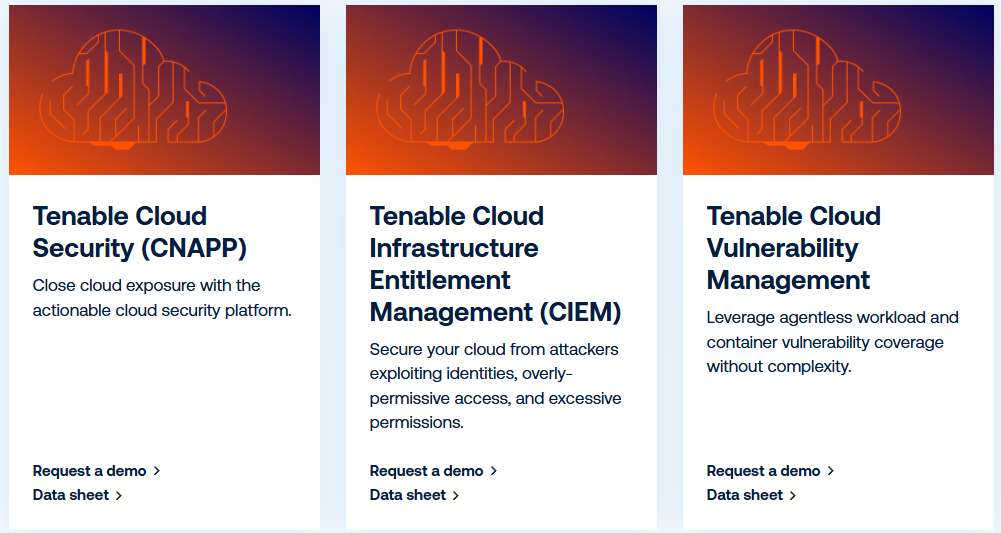
1️⃣ Cloud Exposure: The Silent Data Hemorrhaging ☁️🗄️
🔹What Makes Cloud Different
Cloud environments spawn resources dynamically—storage buckets, VMs, serverless functions appear hourly via automation. Unlike static servers, 68% of cloud assets remain undiscovered by traditional scanners for 30+ days. ☁️
🔹Most Common Exposure Scenarios
- Public Storage Buckets: S3, Azure Blob accounts misconfigured as public expose 1.2B records yearly. Healthcare PII, financial docs sit openly indexed by Google.
- Over-Privileged IAM: Developer roles grant entire account access. Junior engineer deletes production database accidentally (happens 2x/week average Fortune 500).
- Kubernetes Misconfigurations: Pods run root-privileged; unused API servers expose cluster control.
🔹Business Impact Numbers
| Exposure Type | Average Cost | Frequency |
|---|---|---|
| Data Leak | $4.8M | 43% enterprises quarterly |
| Accidental Delete | $2.1M | 67% cloud teams yearly |
| Shadow Spend + Risk | 32% budget waste | Daily |
Real Example: Capital One 2019 breach—100M customer records via single IAM role flaw. $190M settlement.
2️⃣ Vulnerability Exposure: Known Flaws Weaponized Fast 🐛⚠️
🔹The Vulnerability Lifecycle Reality
Discovery → Disclosure → Weaponization: Average 15 days. Teams patch in 92 days. Attackers win. ⏱️
🔹Critical vs. Exploitable
High CVSS (10.0) + No Path to Critical Assets = Low Priority
Medium CVSS (6.5) + Internet Path to Payment Gateway = Fix NOW
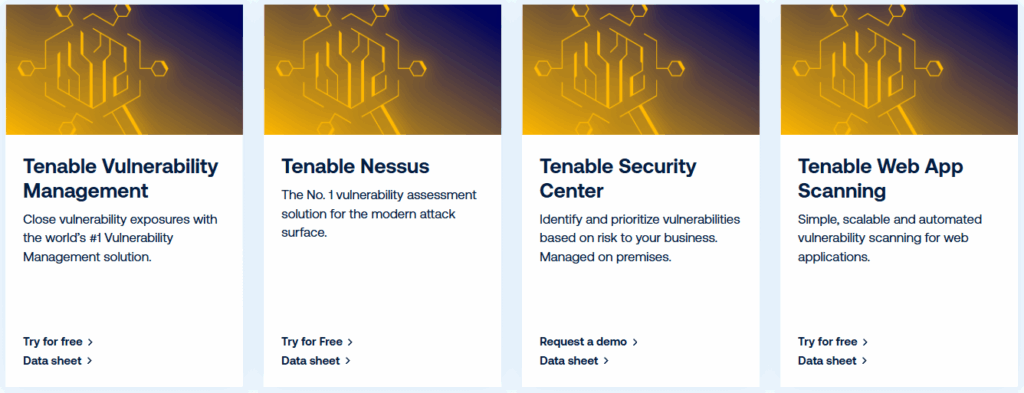
🔹Common Business-Critical Vulns
- Web Servers: Exchange ProxyShell, Apache Struts—payment portals exposed
- Workstations: PrintNightmare local priv escalation → domain admin
- Network Devices: Cisco IOS flaws grant router control → lateral movement
🔹Data Points Driving Urgency
- 60% breaches exploit known vulns 6+ months old
- RDP port 3389 open = 11x breach likelihood vs. hardened
- Unpatched Exchange = 92% of 2025 ransomware entry points
Retail Reality: Payment gateway vuln + internet exposure = immediate PCI-DSS violation, $500K fines minimum.
3️⃣ OT Exposure: Physical Operations Under Digital Siege ⚙️🏭
🔹Why OT Creates Unique Risk
No Patch Windows: Production lines run 24/7. Rebooting PLCs costs $190K/hour downtime.
Legacy Reality: 72% OT runs unsupported Windows XP/7, SCADA from 1998.
Converged Risk: Factory IT phished → OT controllers compromised via shared VLANs.
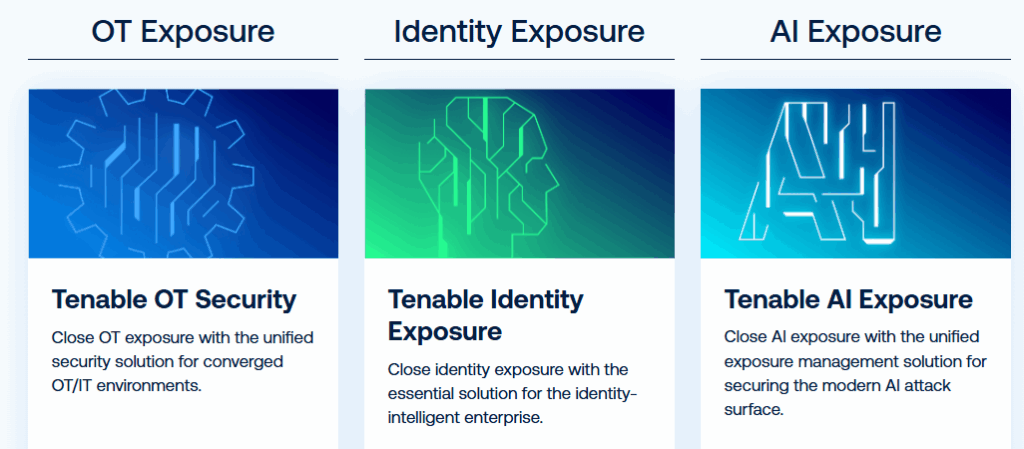
🔹Attack Scenarios by Industry
| Industry | OT Asset | Attack Impact | Cost/Hour |
|---|---|---|---|
| Manufacturing | PLCs, Robots | Assembly line halt | $190K |
| Oil/Gas | SCADA Systems | Pipeline shutdown | $2.4M |
| Pharma | Temp Monitoring | FDA production halt | $450K |
| Ports | Crane Controls | Container operations stop | $1.2M |
🔹Vendor Remote Access Danger
85% factories allow vendor TeamViewer/RDP straight to OT controllers. No MFA. Default passwords. Single phishing email = full compromise.
Colonial Pipeline 2021: OT exposure via compromised VPN halted East Coast fuel 6 days. $4.4M ransom.
4️⃣ Identity Exposure: The Master Keys Attackers Crave 👤🔑
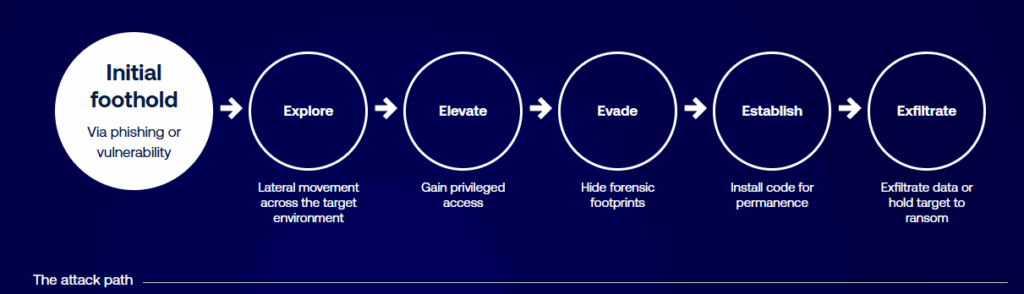
🔹The Identity Attack Lifecycle
- Harvest Creds: Phishing, infostealers, RDP brutes
- Privilege Escalation: Local admin → domain admin
- Lateral Movement: Service accounts → enterprise-wide
- Data Exfiltration: Crown jewels accessed
🔹Identity Risk Hotspots
- Service Accounts (Never Rotate): 43% breaches
- Dormant Domain Admins: 28% breaches
- Over-Privileged Helpdesk: 19% breaches
- MFA Coverage Gaps: 15% breaches
🔹Hybrid Identity Complexity
Active Directory + Entra ID Overlap:
AD Domain Admins: 15-year-old accounts, password never changed
Entra Service Principals: App registrations with Owner role
Hybrid Gaps: AD synced to cloud = double exposure
🔹Business Impact Reality
- 81% breaches identity-based (Verizon DBIR 2025)
- Average dwell time via identity: 14 days vs. 200+ for vulns
- Golden SAML attacks: Single service account owns entire tenant
Okta 2022: Stolen creds via support system compromise led to 158 customers breached. Identities = fastest path.
👉 How Exposures Chain Across Domains 🔗💥
🔹The Killer Kill Chains
Cloud + Identity: Public bucket (IAM role) → Privileged creds → Full tenant
OT + Vulnerability: Legacy PLC vuln → Vendor RDP → Production halt
Identity + Vulnerability: Stolen creds → Local priv esc → Domain dominance
🔹Cross-Domain Prioritization Table
| Domain Combo | Path to Critical Assets | Business Impact | Priority |
|---|---|---|---|
| Cloud + Identity | Customer DB | $15M | Critical |
| OT + Vendor Access | Production Line | $5.2M | Critical |
| Identity + Endpoint | Domain Admin | $8.7M | High |
| Cloud + Vuln Only | Public Test Server | $100K | Low |
The Exposure Management Advantage: Reveals these intersections automatically. Fix one chokepoint blocks entire chains. 68% risk reduction targeting cross-domain paths first.
Key Takeaway: No domain exists in isolation. Attackers chain cloud misconfigs with identity privs with OT access. Exposure management maps the full matrix, prioritizing intersections creating true business risk not siloed counts. 🔄
Cyber exposure is not just about identifying vulnerabilities it’s about understanding how those weaknesses translate into operational disruption. In digital logistics environments, attacks can directly impact procurement, transportation, and inventory systems. See how cyber attacks affect supply chain operations in real-world scenarios.
📌 The Real Business Impact of Cyber Exposure ⚠️
Cyber exposure does not remain limited to IT systems. When exposure is exploited, the impact spreads across the entire organization.
Downtime ⛔ is often the first visible consequence. A single compromised system can pause operations, delay services, or stop production. Even short outages can affect revenue, internal productivity, and customer commitments.
Data loss 📉 creates long-term damage. Exposure of customer, employee, or business data leads to recovery costs, legal obligations, and erosion of trust that can take years to rebuild.

Compliance issues 📋 emerge when exposure results in regulatory or contractual failures. Missed audit requirements, penalties, and increased oversight slow decision-making and raise operational risk.
Supply chain disruption 🔗 occurs when exposure spreads through connected partners, vendors, or shared platforms, turning one incident into multiple operational failures.
Reputation damage 🧨 is often the hardest impact to repair. Customers and partners remember incidents that signal weak risk control especially when the exposure was preventable.
Understanding the broader concept of cyber risk helps frame why exposure matters to business outcomes like downtime and compliance failures. For a deeper explanation of cyber risk in business terms, see this overview on what cyber risk really means. 🔗
📌 Why Businesses Need Exposure Management Today ⏳
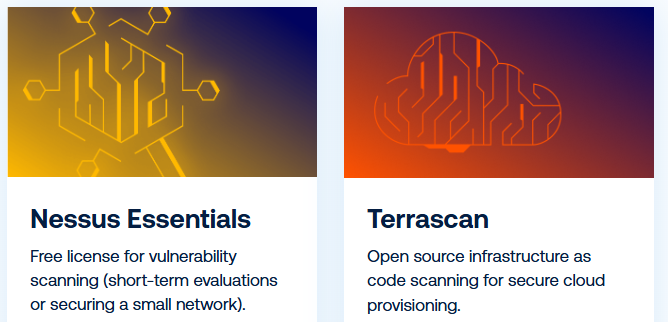
The urgency around exposure management comes from how fast attacks happen and how complex modern environments have become.
Attackers now move quickly using automated scanning and exploitation, often identifying exposure before traditional controls can respond.
At the same time, business environments change continuously:
- cloud assets are created and removed ☁️
- access permissions evolve 🔐
- integrations expand 🔌
Static security reviews cannot keep pace with this speed. Exposure management helps organizations understand where real risk exists right now, not based on outdated assessments.
In today’s environment, reacting after an incident is no longer enough. Businesses need to reduce exposure before disruption occurs.
📌 The Shift Toward Exposure-Based Security Thinking 🔄
Traditional security thinking focused on trying to secure everything equally. In practice, this approach overwhelms teams and dilutes effort.
Exposure-based security thinking takes a more practical view:
- not all systems carry the same business value,
- not all risks have equal impact,
- not all issues require the same urgency.
The focus shifts to:
- identifying which exposures matter most 🎯
- prioritizing action based on business impact 📊
- reducing the most likely paths attackers would use 🚪
Instead of asking “How many issues exist?”, organizations ask:
“Which exposures could realistically harm the business?”
This change aligns security work with operational and leadership priorities.

📌 Who Should Care About Cyber Exposure Management 👥
Cyber exposure management is not just an IT responsibility it is a leadership and business continuity concern.
Business leaders 🧠 should care because unmanaged exposure affects revenue, resilience, and long-term trust. Decisions about risk tolerance belong at the executive level.
IT and security leaders 🛡️ rely on exposure management to focus effort, reduce noise, and clearly communicate risk in business terms.
Operations and risk teams ⚙️ are directly impacted when exposure leads to downtime, compliance issues, or supply chain disruption.
Anyone responsible for keeping the business running should care because unmanaged exposure threatens stability, confidence, and growth.
Conclusion ✅
Cyber exposure management is not about adding more security tools or reacting to more alerts. It is about understanding real-world risk and reducing the exposures that could actually disrupt the business.
As environments grow more complex and attacks move faster, organizations can no longer rely on static assessments or siloed security views. What matters most is visibility, prioritization, and proactive action.
By focusing on the exposures that carry the greatest business impact, companies can reduce downtime, protect trust, and maintain operational stability in an increasingly connected world.
“Related Articles”
- OT Security in Supply Chains: Why Industrial Systems Are a Hidden Risk
- Tenable and ShipChain Integration: Operational Risk Control
FAQs ❓
1. What is cyber exposure management in simple terms?
It is the practice of identifying and reducing the real-world weaknesses that could realistically harm the business.
2. Is cyber exposure management only for security teams?
No. It is a leadership and business continuity issue that affects operations, risk management, and decision-making.
3. How is exposure different from vulnerabilities?
Vulnerabilities are individual weaknesses; exposure considers whether those weaknesses can realistically be used to cause business impact.
4. Why is exposure management important today?
Because modern attacks move fast and business environments change constantly, making traditional security approaches insufficient.